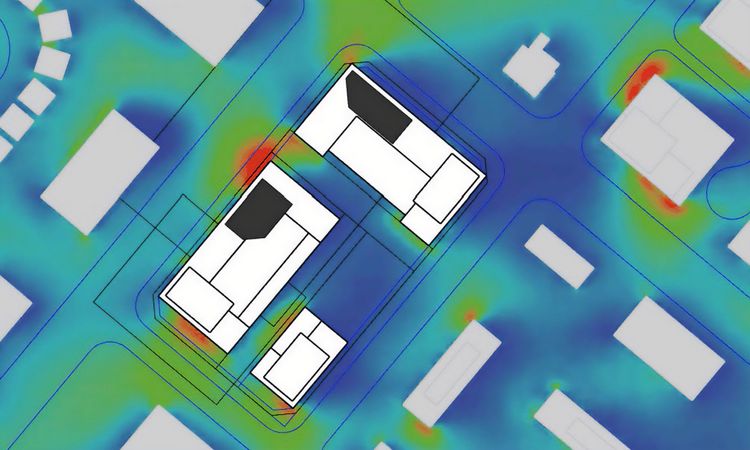
Optimizing Urban Wind Comfort with Infrared City’s AI-Driven Design Tools
As cities grow denser and taller, wind comfort at the pedestrian level has become a critical consideration in creating livable public spaces. In colder climates like Southern Ontario, accelerated wind conditions around towers can intensify cold stress and reduce year-round usability of outdoor areas.
Recently, our team undertook a design exploration to test how artificial intelligence can be used to accelerate and improve wind comfort analysis. In collaboration with Infrared City, we applied their AI-powered simulation platform to a theoretical site in Mississauga. The goal was to combine predictive modeling with a generative design workflow capable of rapidly optimizing tower forms and massing based on prevailing wind conditions.
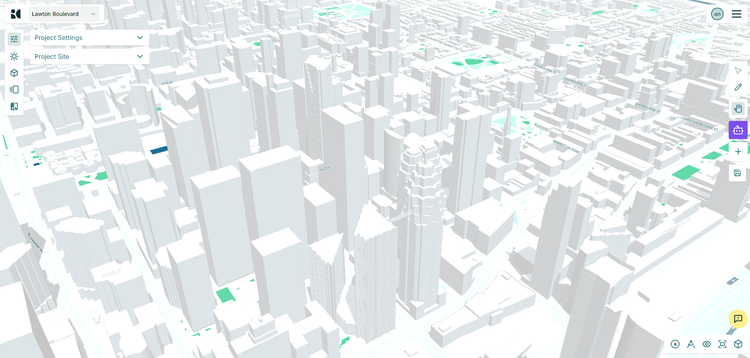
Using a parametric algorithm and Infrared City’s real-time wind comfort engine, we tested a range of building configurations—adjusting variables such as tower depth, rotation, positioning, and corner chamfering. The process allowed us to evaluate performance across multiple iterations, focusing on reducing the percentage of the site affected by uncomfortable or dangerous wind speeds. In targeted areas of the site, the optimized designs yielded up to a 12% reduction in uncomfortable wind conditions, validating both the tool and the approach.
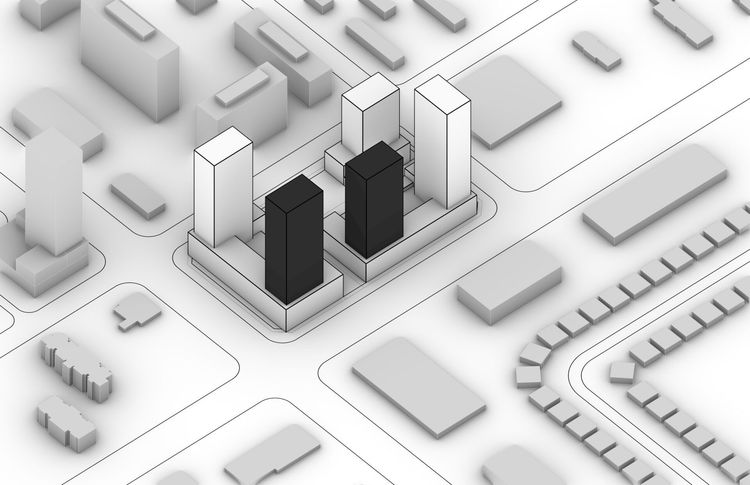
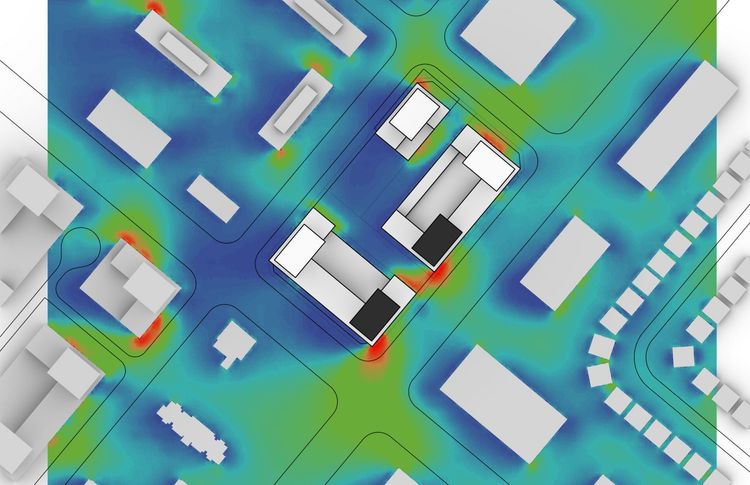
Beyond performance gains, the study reaffirmed our belief that integrating simulation tools at the earliest design stages can support better architectural decisions—without compromising aesthetics or design intent. It also opens new pathways for communicating design performance to clients and stakeholders in a clear, data-backed format.
Read the full case study, developed in partnership with Infrared City.