skip to content
exploring: undefined
es
Mixed Use

Sinaloa Regional Tourism Plan
Sinaloa's diverse landscapes hold the key to sustainable tourism growth across Mexico's Pacific coast. We partnered with the State of Sinaloa to develop a comprehensive regional action plan that identifies strategic opportunities to expand and diversify tourism while preserving the state's natural abundance. Our approach connects coastal, plains, and mountain ecosystems through targeted interventions that celebrate local culture and strengthen economic resilience.
project Type
Mixed Use
location
Culiacán, Sinaloa
client
State of Sinaloa Mexico
dates
2018 - present
expertise
Planning
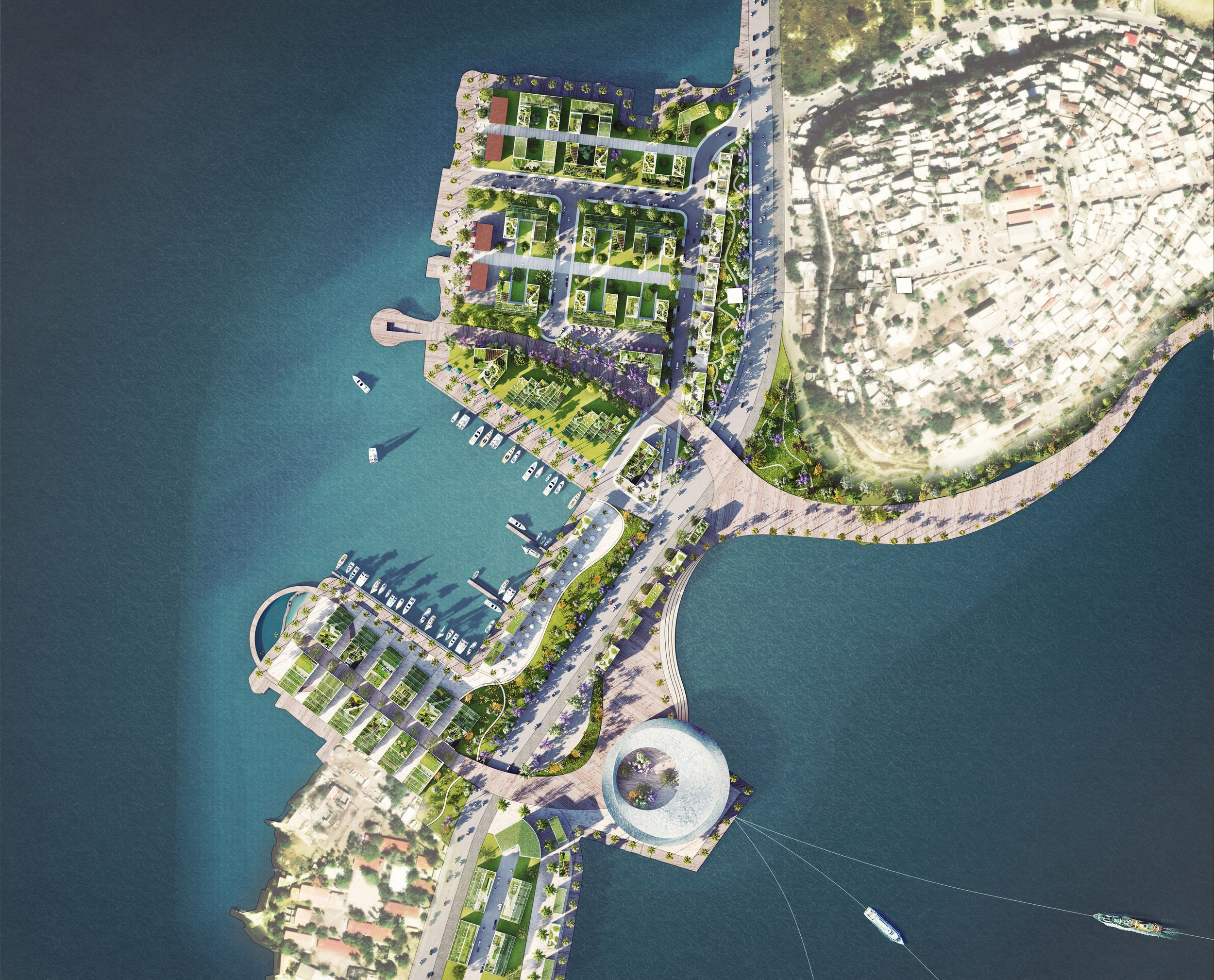
Aerial master plan showing a coastal residential development with marina facilities, waterfront homes, and a circular pier structure at the southern end.
Mixed Use

Sinaloa Regional Tourism Plan

Aerial master plan showing a coastal residential development with marina facilities, waterfront homes, and a circular pier structure at the southern end.
project Type
Mixed Use
location
Culiacán, Sinaloa
client
State of Sinaloa Mexico
dates
2018 - present
expertise
Planning
Sinaloa's diverse landscapes hold the key to sustainable tourism growth across Mexico's Pacific coast. We partnered with the State of Sinaloa to develop a comprehensive regional action plan that identifies strategic opportunities to expand and diversify tourism while preserving the state's natural abundance. Our approach connects coastal, plains, and mountain ecosystems through targeted interventions that celebrate local culture and strengthen economic resilience.

Sinaloa's tourism potential lies in its natural abundance. The state's coastal, plains, and mountain landscapes exist in parallel bands connected by river systems flowing toward the Pacific Ocean. This geographic richness includes productive agricultural lands, cattle pastures, and shellfish farms that occupy the plains and hills between mountains and coast.

Our regional planning approach uses these natural systems as the foundation for sustainable tourism development. We identified how existing resources and settlement patterns can support diverse tourism clusters. Historic mining towns like Cosalá and El Rosario offer cultural heritage experiences, while coastal areas like Playa Colorada present ecotourism opportunities that respect marine ecosystems.
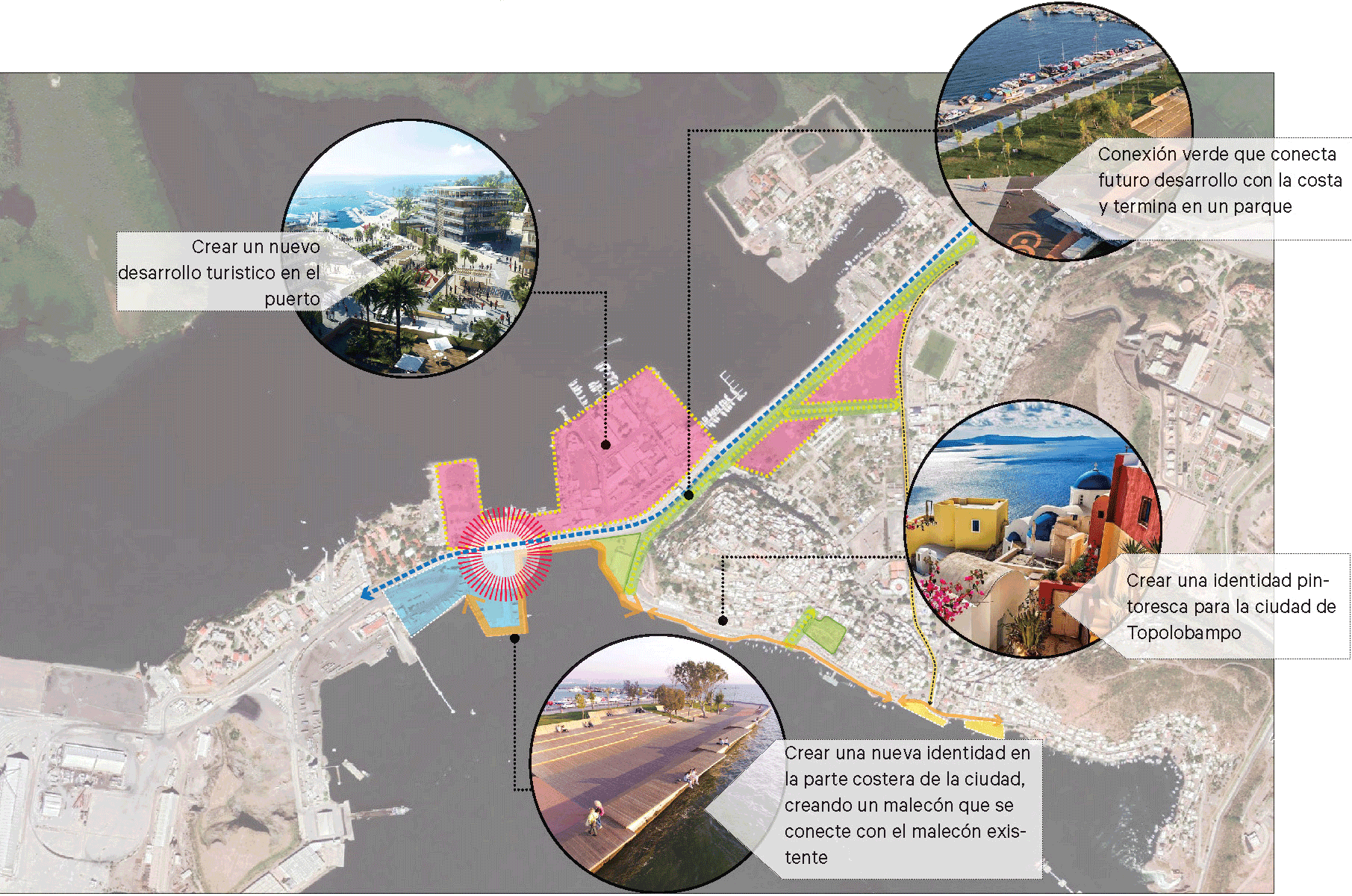
 

Urban development plan showing proposed waterfront improvements for Topolobampo, including new tourist facilities, coastal walkway connections, and visual identity elements.

The action plan organizes development around five strategic clusters: ecological, rural, cultural, business, and coastal nodes. Each cluster builds on existing community assets while creating economic opportunities. In Guamuchil, the Pedro Infante Museum anchors a broader cultural tourism cluster. Along the coast, sustainable aquaculture activities integrate with development to support economic and environmental goals.
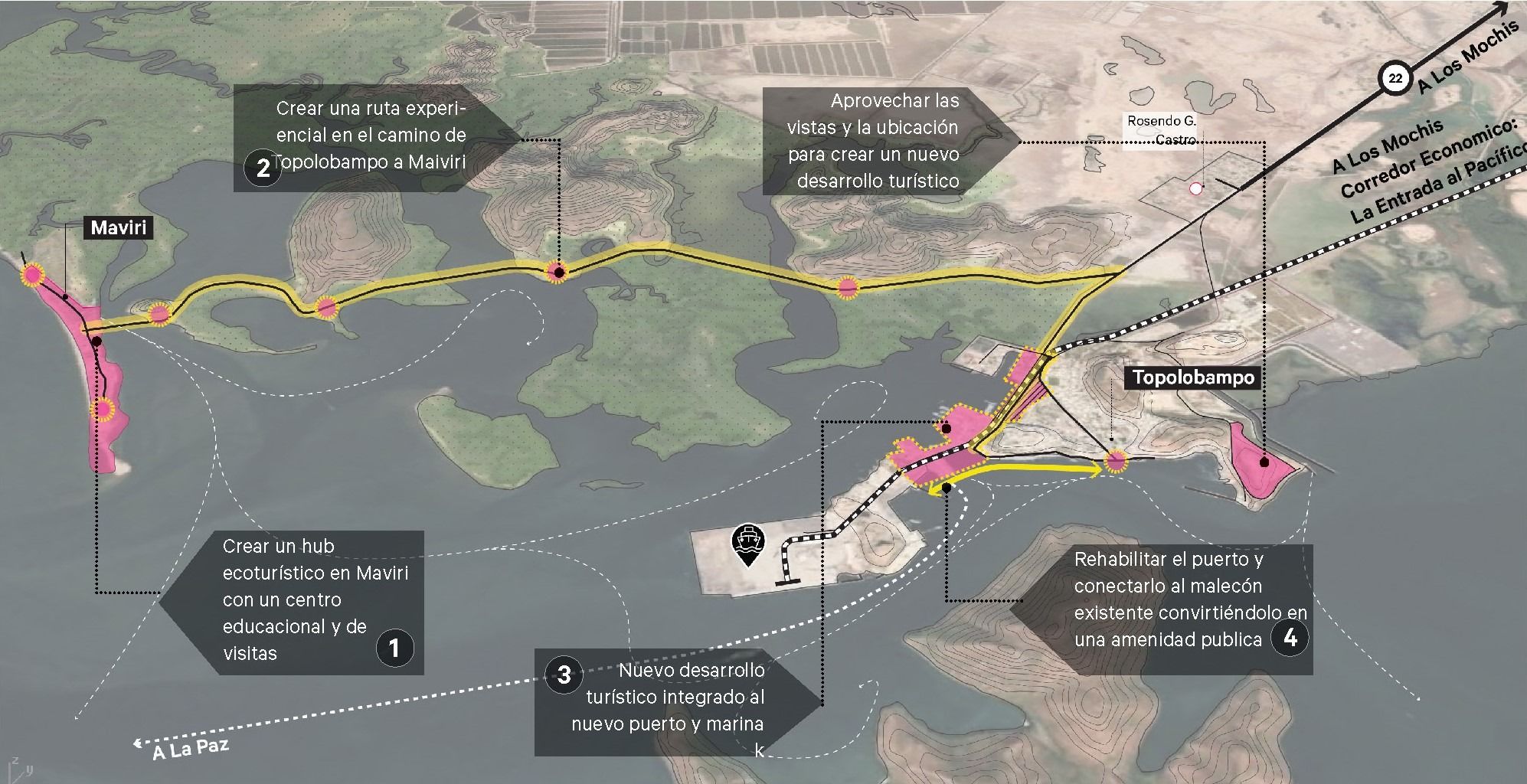
Tourism development plan showing four interconnected projects along the Mavirí-Topolobampo coastal route, including an ecotourism hub, scenic path, marina development, and port rehabilitation.

Central to our approach is connecting and preserving the river valleys of Sinaloa and Evora around existing communities. These waterways link different tourism experiences while supporting biodiversity and community life. The plan integrates health-related tourism opportunities, including thermal springs, within the rural offering.
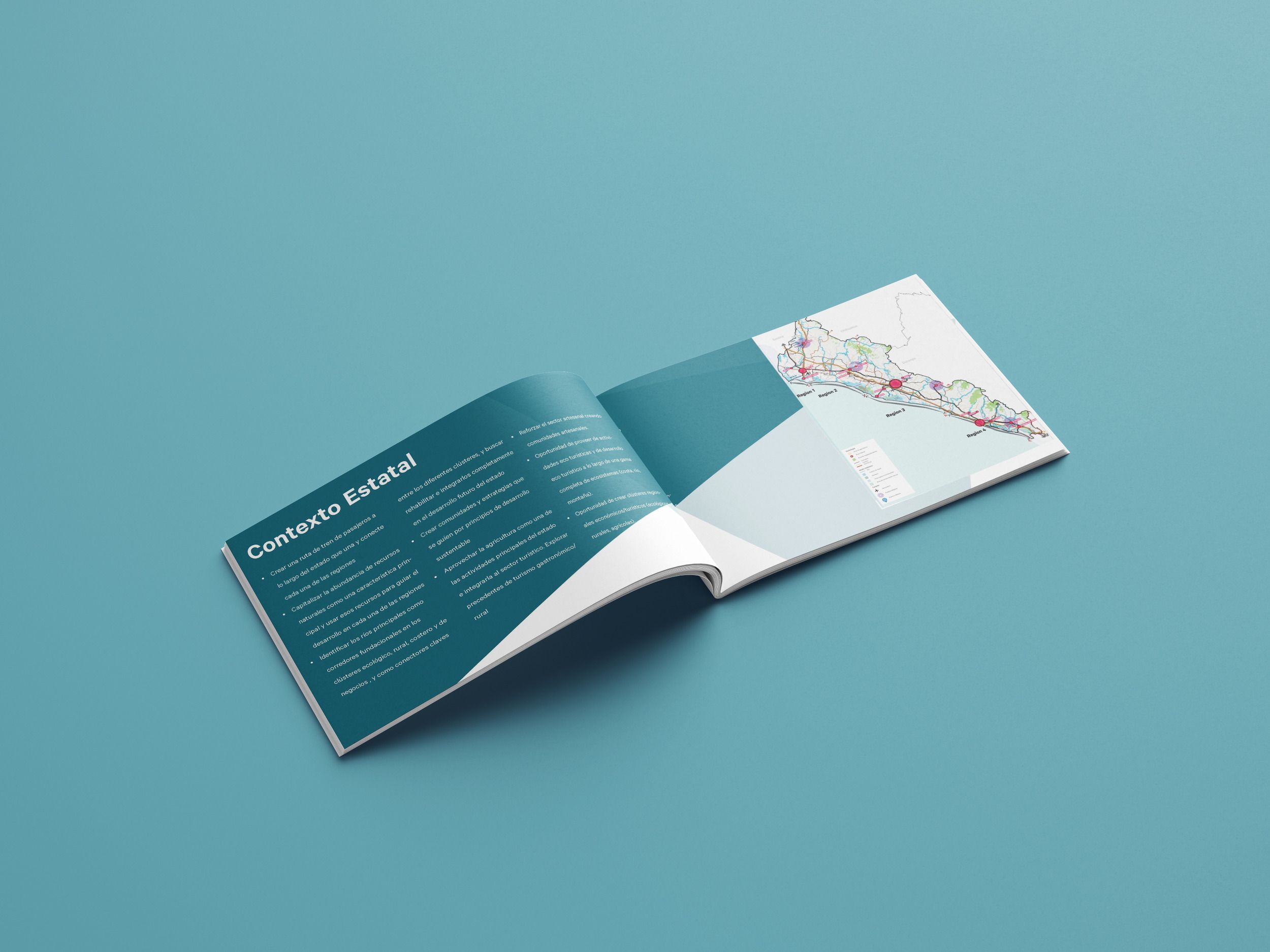
Open document showing a state context section with map illustration and text layout in teal and white color scheme.

The resulting framework provides clear pathways to diversify Sinaloa's tourism economy while maintaining the authentic character and natural systems that make the region distinctive.