Parque Trígono
Parque Trígono
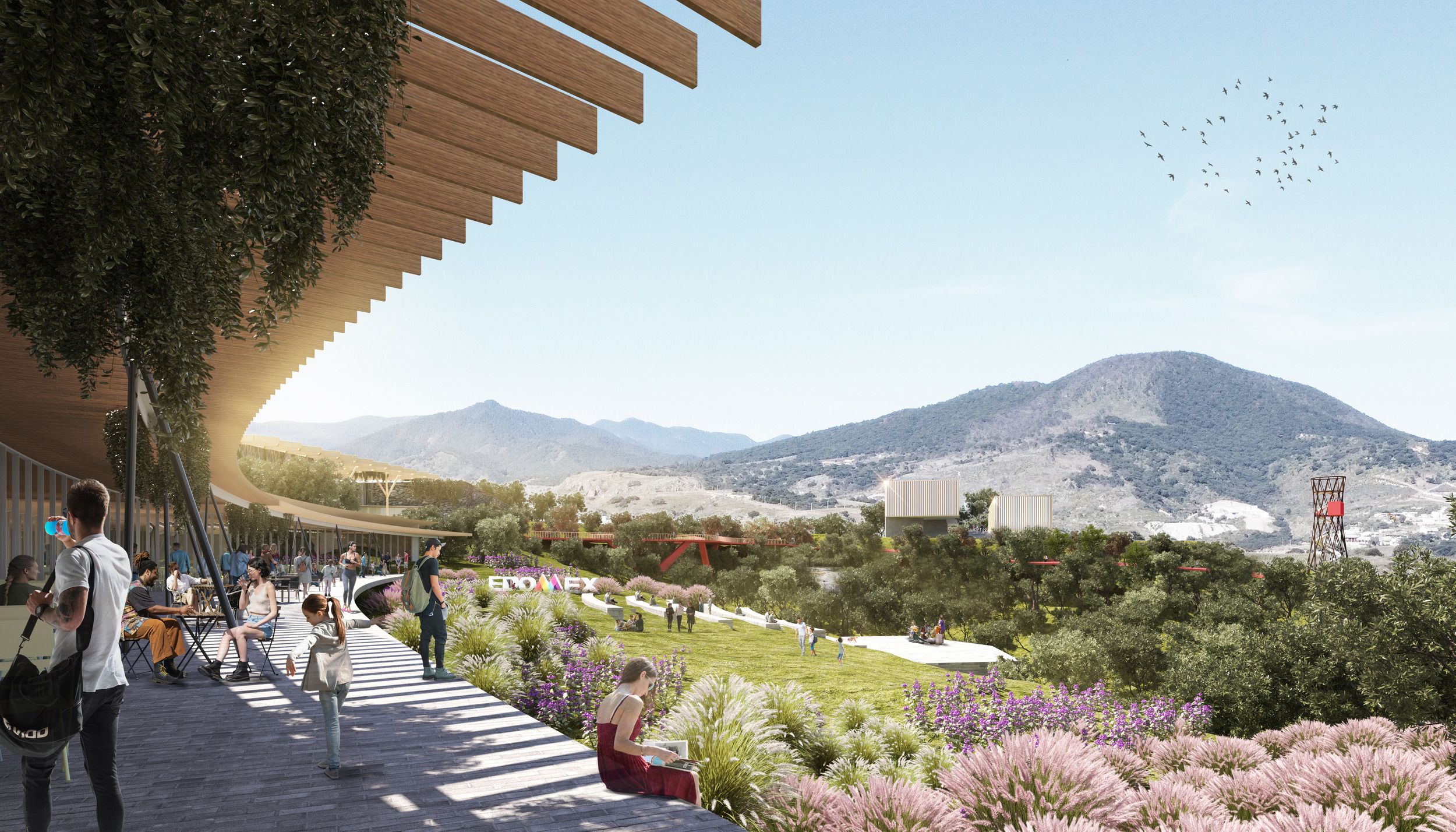
Parque Trígono sits on a northwest-facing slope with a remarkable 45-metre vertical drop, immediately adjacent to deep creek systems that provide uninterrupted vistas of expanding landscapes and unique natural ravine features found nowhere else in the immediate region.
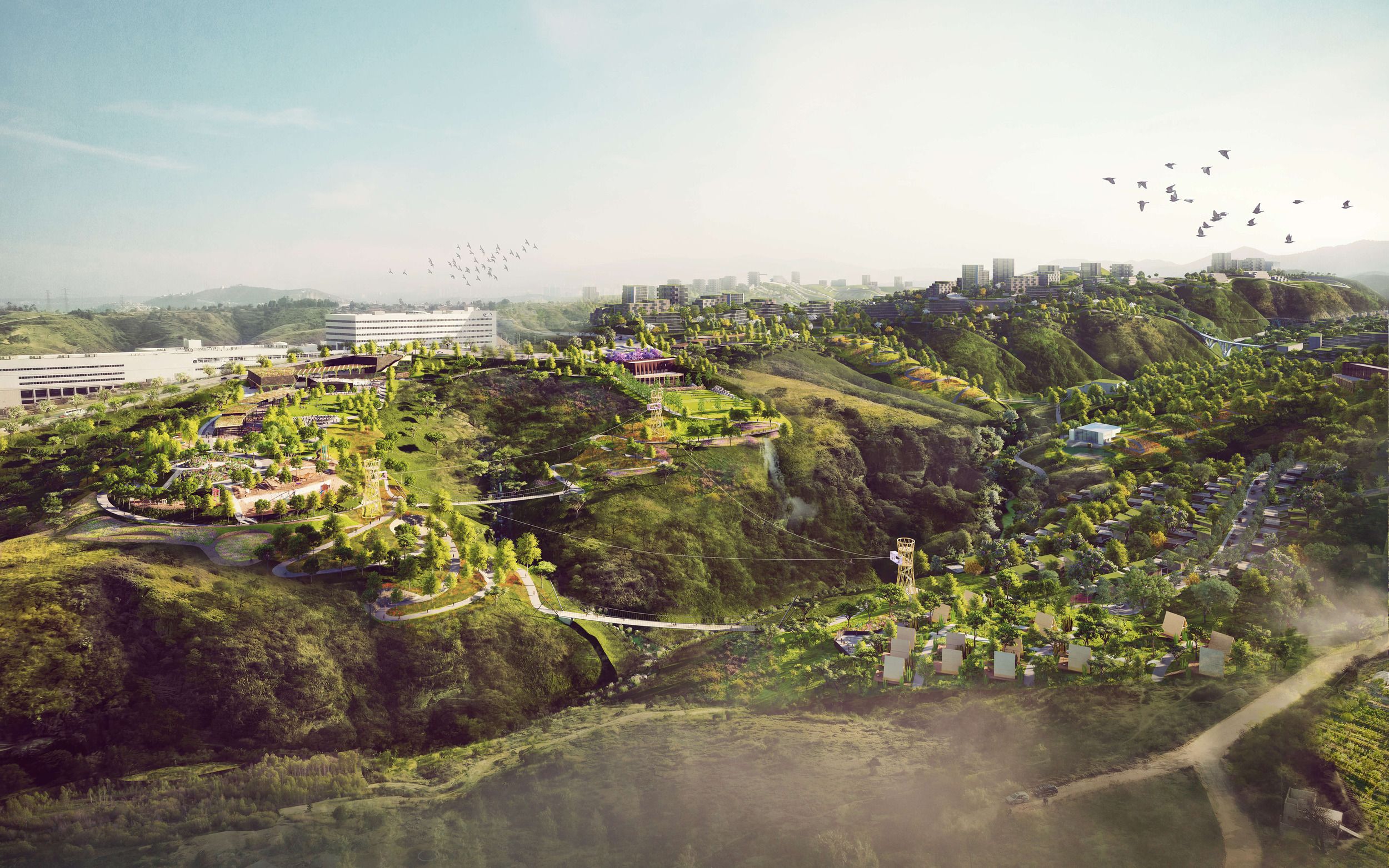
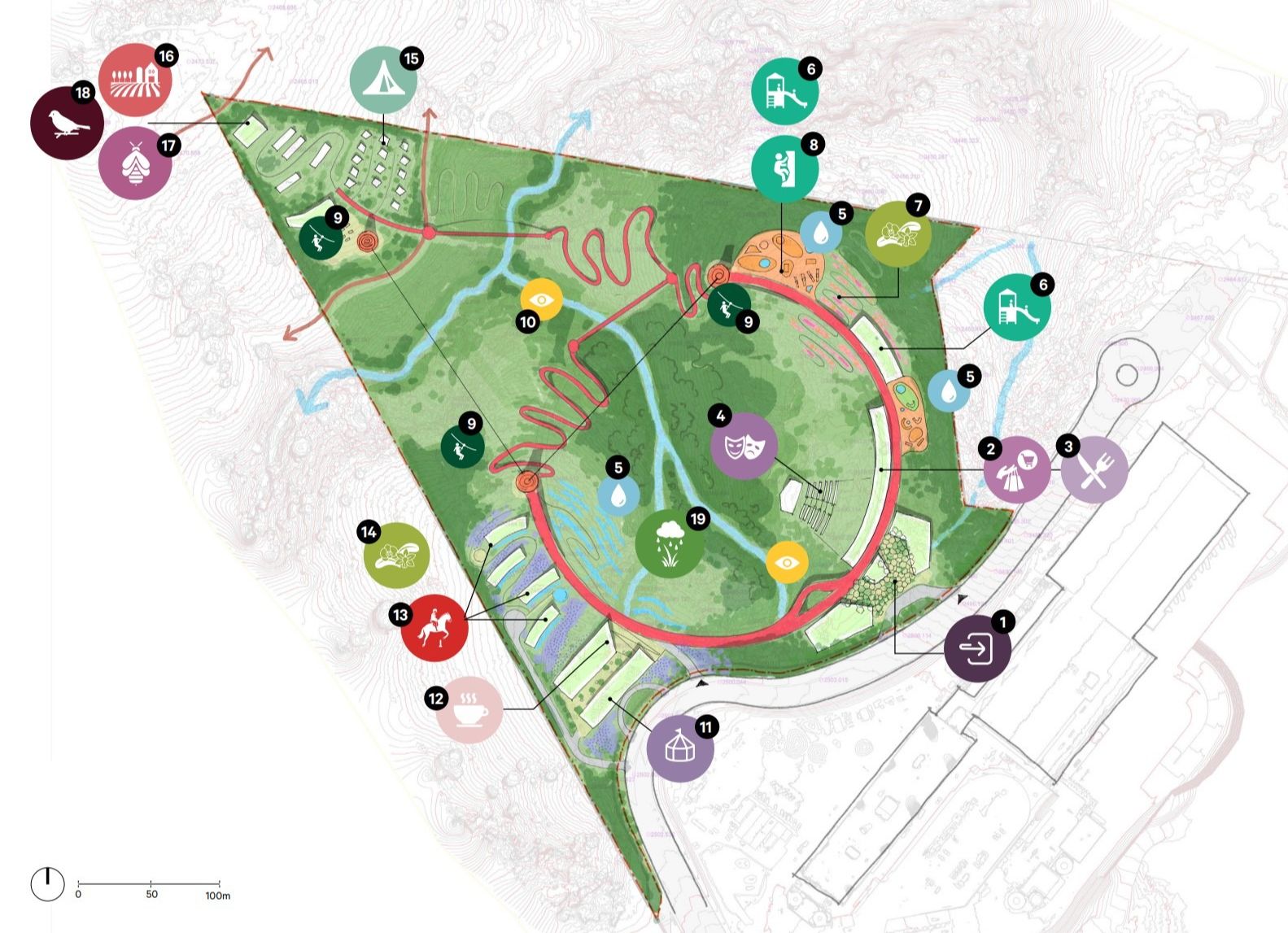
A circular promenade connects diverse experiences across the challenging terrain. Our conceptual design features a pathway that traverses the site's dramatic elevation changes, revolving around the main ecological conservation area. This circulation strategy enables visitors to experience the full range of programmed spaces while promoting soil regeneration through water retention and natural reforestation processes.
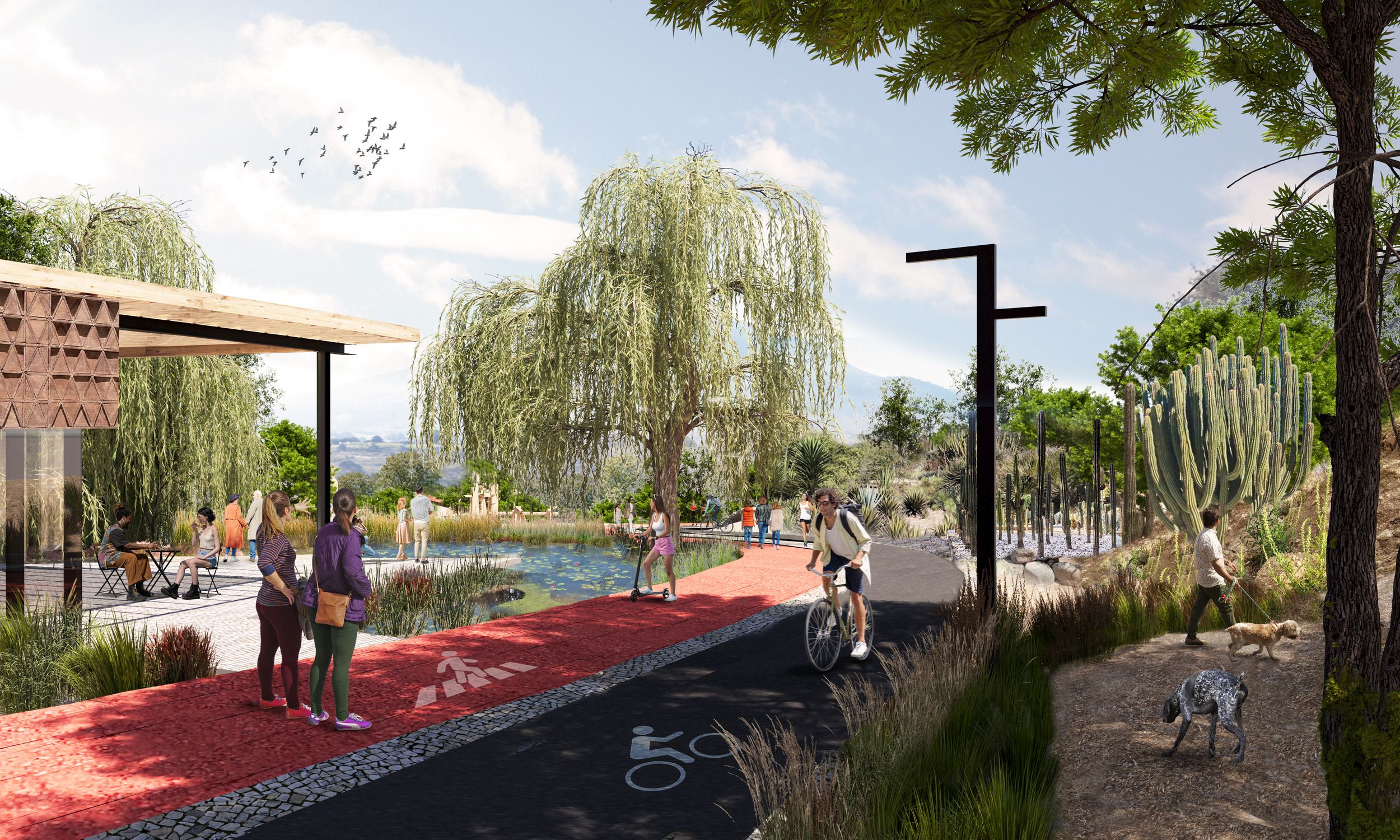
Our park design balances active exploration with quiet contemplation, all while protecting the natural environment. It includes a community hub for city services and cultural events, natural playground, dog park, and productive landscapes including orchards, wetlands, and botanical gardens. More adventurous visitors can enjoy two zip lines spanning 150-200 metres and a small glamping site at the north end, separated from the main park by the natural ravine system.
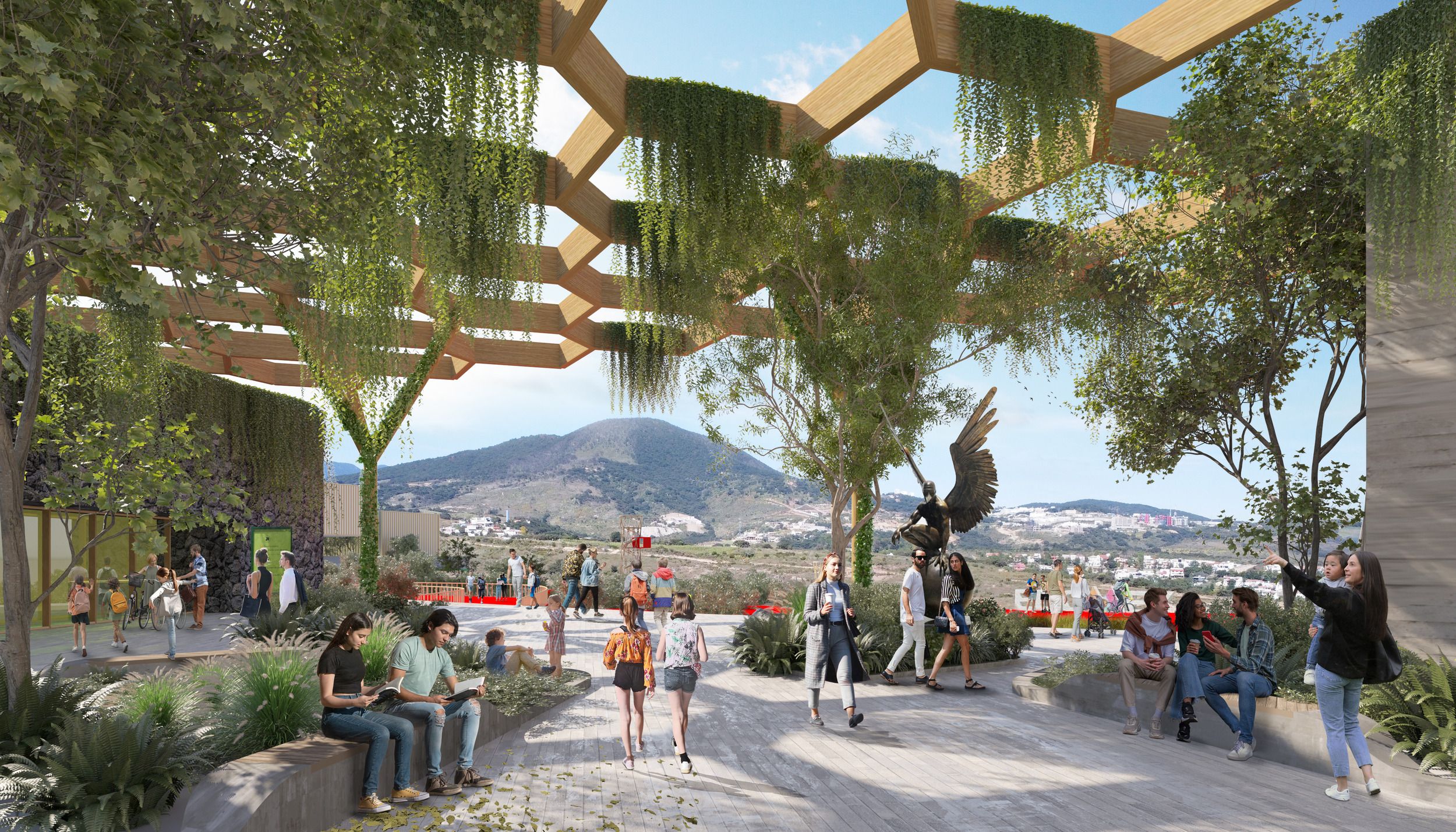
Two suspension bridges help navigate the existing creeks and ravines that naturally divide the park into three areas. At these crossing points, 20-metre tall towers provide launch points for the zip line adventures, while lookout points throughout the grounds offer contemplative spaces accompanied by bioswales and rain gardens for water management.

Our design prioritizes ecological regeneration and microclimate adaptation. The landscape strategy promotes water retention and soil biomass building through strategic infiltration systems. These principles ensure effective operation and maintenance while delivering positive environmental impact and regenerative contributions to the broader region.
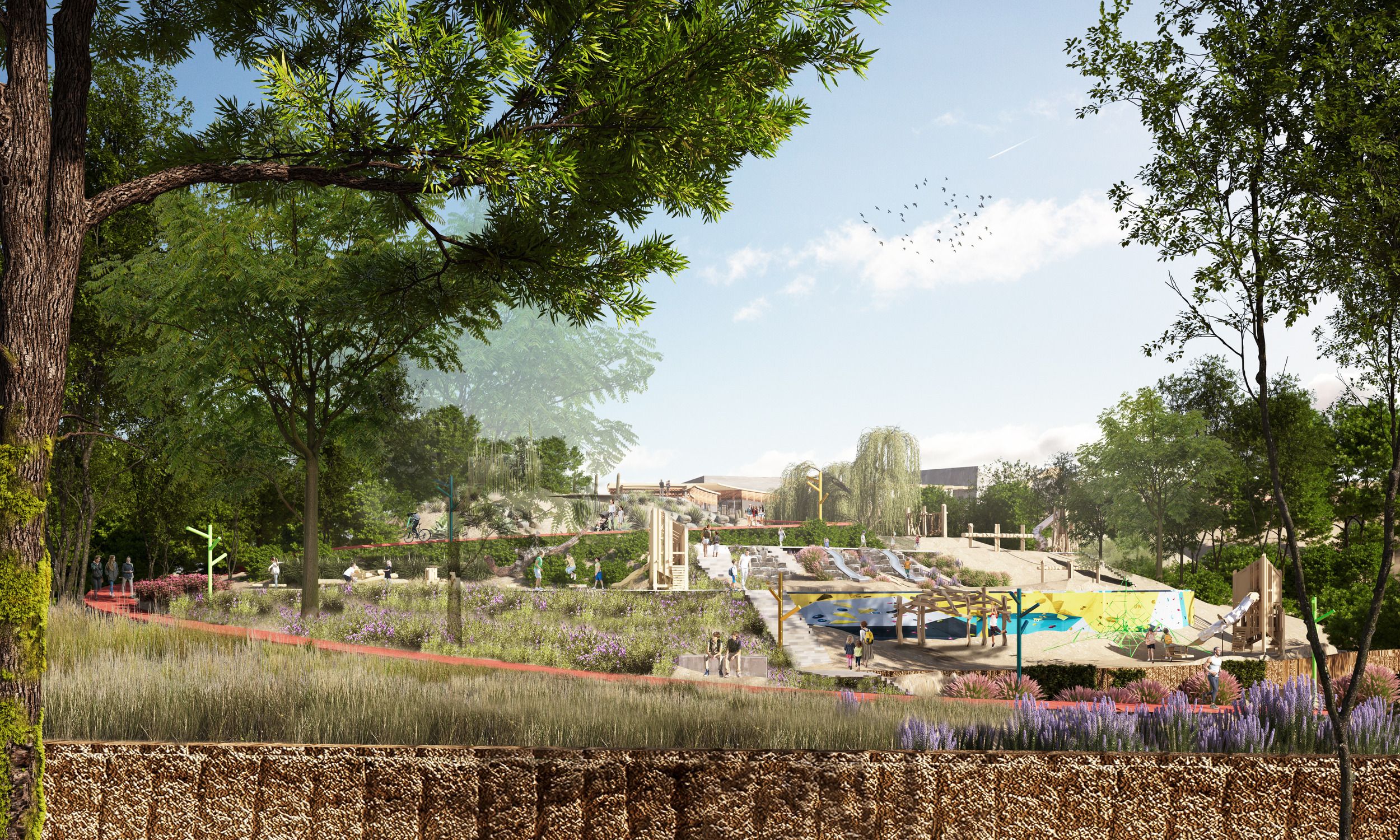
The park establishes a new model for recreation within Mexico's natural conservation zones. By balancing active recreation programs like the pump track for cyclists with passive contemplation spaces, Parque Trígono demonstrates how thoughtful design can protect sensitive ecological areas while providing essential public recreation infrastructure for growing urban communities.